Train - Recover - Adapt - Improve

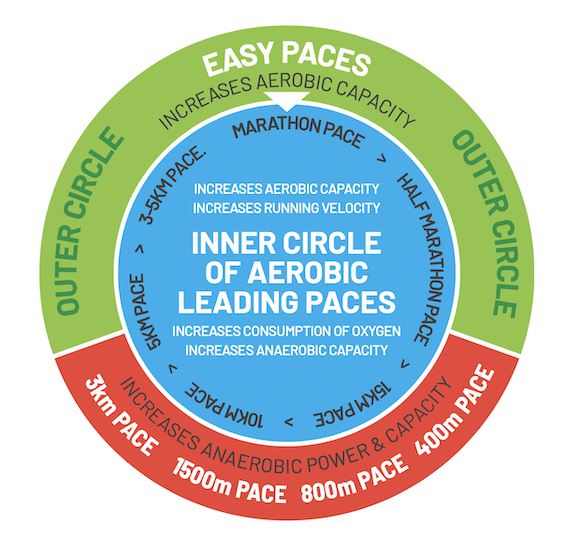
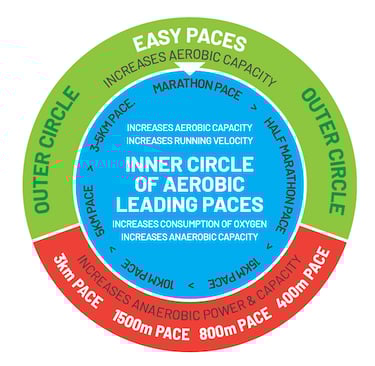
A system for high performance delivery is based on the following aerobic leading inner circle paces: Marathon, Half Marathon, 15km, 10km, 5km and 3-5km paces. Completed higher end aerobic paces make up the reservoir of inner circle paces and over time building a larger reservoir will directly improve an athlete’s running time. There are paces outside the inner circle such as easy pace running, 3km, 1500m, 800m and 400m pace running that are important, however they are not the paces that are going to make the difference in training for a runner to maximise their performance. An athlete can run too slow or too fast in training so it’s important to control the running paces to between marathon and 3-5km paces in order to get the greatest amount of benefit from putting the body under stress - the inner circle paces.
Running at an easy pace up to marathon pace will make up a considerable part of an athlete’s exercise time especially in terms of recovery. However for building aerobic capacity and endurance it is limited for the stress on the body at such easy paces is too light and does not greatly extend the use of oxygen. At the other extreme, running fast hard paces will create desired large oxygen debt levels but it is limited to the track season where body adaptation is a pace or too fast a pace. Benefits such as increased aerobic capacity, increased running velocity, increased consumption of oxygen and increased tolerance of acidosis (anaerobic capacity).
Research has shown that utilisation of these inner circle paces in training has a direct correlation to high levels of performance. However such aerobic led paces require patience and the high end aerobic cruising or training paces evolve over time and cannot be forced or rushed. Ron Clarke set 17 World Records which were built on amazing aerobic conditioning both in terms of volume and quality. The bulk of Clarke’s running was close to his anaerobic threshold - steady pace running for sustained periods of time. Training strictly according to a running schedule is all very well however it can hold back the athlete’s development for it is impossible to have a pre-determined schedule that lines up exactly with how the athlete is feeling on a particular day, possible but difficult and full of dangers such as acidosis, injury and illness. Training consistently at appropriate levels of intensity truly tests the use of oxygen under stress and as a result boosts endurance/aerobic strength since the athlete will come close to their maximum oxygen uptake when running the inner circle paces.
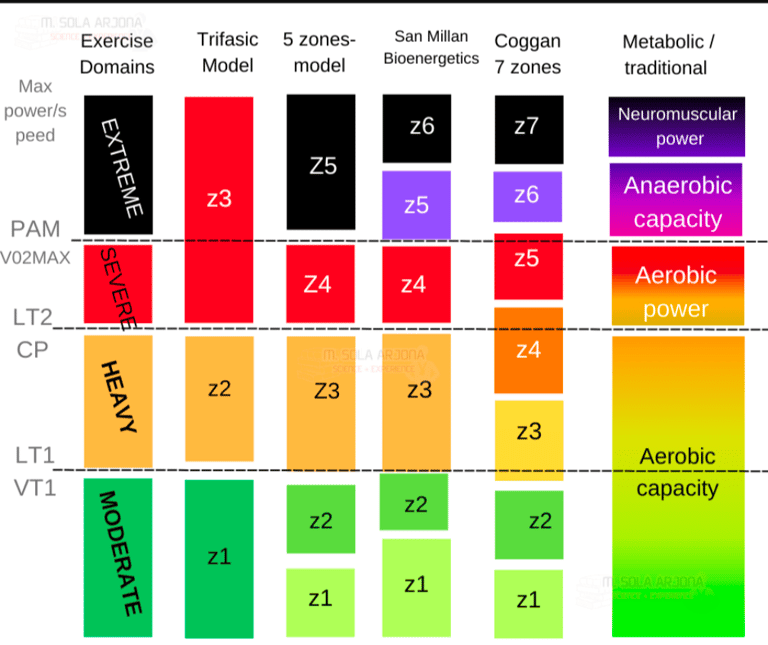
These highly efficient paces overarch the aerobic capacity and the aerobic power zones and bring benefits that are not possible by running at either too slow or too fast a pace. Even within the aerobic capacity zone increasing the pace from easy to marathon pace in the latter stages of a long run can be hugely beneficial due to the duration of this workout. As we know long runs are best for improving the utilisation of oxygen which is why long runs are so important. By increasing the pace up to around marathon pace in the latter stages then the athlete is boosting that utilisation to even higher levels allowing even more oxygen to be made available to the body. It is really maximising the efficiency of the long run and just another example of the benefits of utilising oxygen when the body is put under the right sort of stress which adds to the reservoir of inner circle paces.
Finally a word of caution for there are times when an athlete does need to listen to their body and back off and run at an easy pace all through a workout session - they may be genuinely tired especially after say an anaerobic workout or a race or any other reason. It is better to take some downtime and lock in the benefits of consistent training at the inner circle paces than to push on regardless and walk the wrong side of the line.